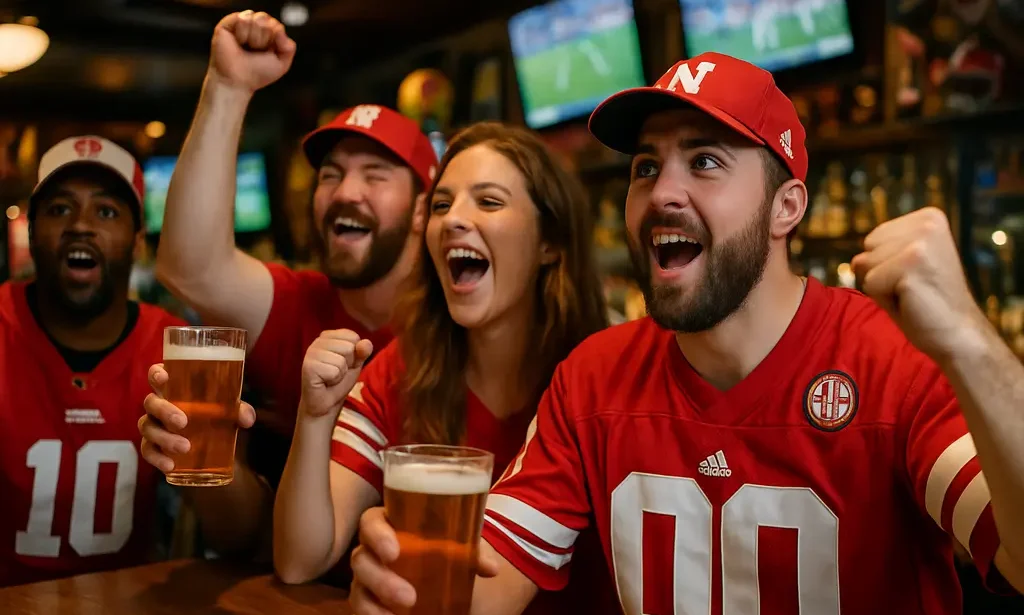
Nebraska Sports Betting is at a clear regulatory split point as of September 3, 2026. Nebraska permits only in-person sports wagering at licensed racetrack enclosures, according to the Nebraska Racing and Gaming Commission, while online sports wagering has not been authorized. The November 3, 2026 general election ballot is scheduled to include two related measures: a constitutional authorization measure and a statutory regulation initiative. For bettors and market analysts, the useful question is not whether one side of the policy debate will prevail. The better frame is how each measure would change market access, sportsbook structure, tax design and comparison points against states that already allow statewide mobile wagering.
Nebraska Sports Betting Ballot Structure
Constitutional And Statutory Tracks
The research record identifies two statewide ballot measures tied to online sports wagering. One is an Online Sports Wagering Authorization Constitutional Amendment. The other is an Online Sports Wagering Regulation Initiative. The distinction matters because a constitutional authorization can create the legal opening, while statutory language can set the operating terms for regulators, licensed operators and platform providers.
The petition process also shows a higher hurdle for the constitutional route. The constitutional amendment petition required valid signatures from 10% of registered voters, about 125,815 signatures, plus distribution across at least 38 counties. The statutory initiative required 7% of registered voters, about 88,071 signatures, with the same county-distribution threshold. Research notes state that both thresholds were exceeded during July and August 2026. That does not indicate voter approval; it only means the measures qualified for the November 3, 2026 ballot.
Nebraska Sports Betting Access Rules
The proposed statutory framework would allow online wagers only through authorized gaming operators or platform providers working with racetrack-licensed operators. It also requires wagers to be placed from inside Nebraska and allows up to two platforms per operator, with rules and regulations to be adopted by June 1, 2027 if the measures pass, under the proposed statutory language. For market comparison, those details are more meaningful than a simple legal-or-illegal label because they affect operator count, account acquisition, app availability and potential pricing competition.
Retail Baseline And Mobile Access Gap
Current Retail Channel
Nebraska’s present structure is retail-only. The research notes show that since sports betting launched at racetracks in June 2023, retail sportsbook gross gaming revenue rose from $1.7 million in 2023, when three casinos launched, to $4.7 million in 2024. Corresponding tax revenue was about $355,000 in 2023 and about $950,000 in 2024. That growth is notable, but the base remains limited by physical location and by the absence of statewide mobile account use inside Nebraska.
For Nebraska Sports Betting, the practical difference between retail and online access is market availability. Retail sportsbooks can list major spreads, totals and moneylines, but mobile markets in many states tend to add more depth in same-game markets, player props and in-play menus. The research does not provide operator-by-operator Nebraska menus or odds, so any direct claim about pricing gaps would be unsupported. The stronger evidence is structural: retail-only access limits how often bettors can compare available markets inside the state.
Account Activity And Cross-Border Signals
The research notes identify more than 83,000 active mobile sports wagering accounts associated with Nebraska during the 2024–25 Nebraska football season, with activity tied to platforms outside Nebraska because in-state online wagering was not legal. GeoComply data cited in the research also indicated about 3.9 million attempts to access out-of-state legal online sportsbooks from within Nebraska and about 42,000 border crossings, with 92% into Iowa.
Those figures do not prove how a future Nebraska mobile market would perform, and they should not be read as a betting recommendation. They do suggest observable demand for mobile access around real sporting events, especially football. From a sportsbook-comparison angle, cross-border activity can also indicate that some users are already familiar with account-based pricing, app menus and state-by-state geolocation rules.
Market Design Compared With Other States
Platform Limits And Racetrack Partnerships
The proposal’s two-platform-per-operator structure would create a defined channel between racetrack licensees and mobile platforms. That model would not be an unlimited open-license market. It would also not be purely retail because platform providers could operate through partnerships. For bettors comparing markets, the number of approved skins matters because fewer platforms can reduce direct line comparison, while more platforms can increase overlap in promotions, prop menus and live-betting options.
| Market Feature | Nebraska Current Rule | Proposed Online Framework | Comparison Point |
|---|---|---|---|
| Access | In-person wagering at licensed racetrack enclosures | Online wagers placed from inside Nebraska | Moves access from venue-based to geolocated mobile use |
| Operator Structure | Racetrack-linked retail sportsbooks | Authorized operators or platforms partnered with racetrack licensees | Preserves racetrack role while adding platforms |
| Platform Count | Not an online-platform market | Up to two platforms per operator | Would shape app variety and market depth |
| Regulatory Timing | Existing retail oversight | Rules due by June 1, 2027 if approved | Creates an implementation window after the vote |
Tax And Revenue Framing
The broader U.S. comparison in the research notes shows that online sports betting is legal statewide in 30 states plus Washington, D.C., while 40 states have legalized sports wagering in some form. Tax rates vary widely, and many states treat online and brick-and-mortar wagering differently. Nebraska’s legislative proposal LB 438 in 2025 would have used a 20% tax rate on online sports betting gross gaming revenue, with allocations to compulsive gambling treatment, a racetrack gaming fund, property tax credit, the general fund and education.
A separate research estimate from Eilers & Krejcik Gaming placed potential new Nebraska state tax revenue at just under $87 million over five years from legalized online sports betting, with about $61 million earmarked for property tax relief. Estimates are not realized collections. They depend on final rules, license participation, tax rate, promotional deductions if any, user behavior and competition from neighboring states.
Sportsbook Comparison Issues For Nebraska Bettors

Pricing And Market Depth
A Nebraska mobile framework would give analysts more observable data points than the current retail-only setup. If approved and implemented, market comparisons could focus on how many licensed apps enter, whether each carries similar main markets, how live-betting availability differs by sport, and whether player-prop variety is broad or concentrated among a few operators. Without approved online operators or current Nebraska mobile odds, no pricing conclusion can be drawn as of September 3, 2026.
Sportsbook comparison should remain evidence-based. Bettors should review rules, market availability, settlement language and responsible gambling tools before interpreting any price difference. A better number at one operator is meaningful only if the market is comparable, the rules match and the bettor is using a regulated channel available in the relevant jurisdiction.
Regulated Versus Unregulated Access
The research record points to access attempts involving out-of-state legal sportsbooks, not a Nebraska-licensed online system. That distinction is central. Regulated in-state wagering would be subject to Nebraska’s adopted rules, geolocation requirements and approved operator structure. For a related risk frame, BettorSearch has separately examined regulated sportsbooks and offshore market risk. Those looking to delve deeper into peer comparisons within the same network can explore insights at You Can Bet On It.
- Check whether an operator is authorized in the bettor’s state before comparing markets.
- Separate retail sportsbook data from mobile sportsbook data because access patterns differ.
- Treat revenue projections as scenarios, not confirmed fiscal outcomes.
- Avoid interpreting ballot qualification as voter approval or market launch timing.
Nebraska Sports Betting Market Expansion Signals
What The Measures Would Clarify
The November 3, 2026 ballot is the next dated decision point identified in the research. If voters approve both measures, the statutory framework indicates that rules and regulations would need to be adopted by June 1, 2027. If one measure passes and the other does not, the legal effect may be less direct, and the research notes do not provide enough detail to state the exact operational outcome.
For Nebraska Sports Betting market analysis, the most useful signals are not team outcomes or bet-level opinions. They are access rules, license structure, platform count, tax treatment, responsible gambling funding and regulator timelines. Nebraska’s current retail market provides a small revenue baseline. The proposed online model would create a more comparable structure against mobile states, but only after voter approval and rulemaking. Until then, any market-expansion read should remain conditional and tied to the documented ballot language.