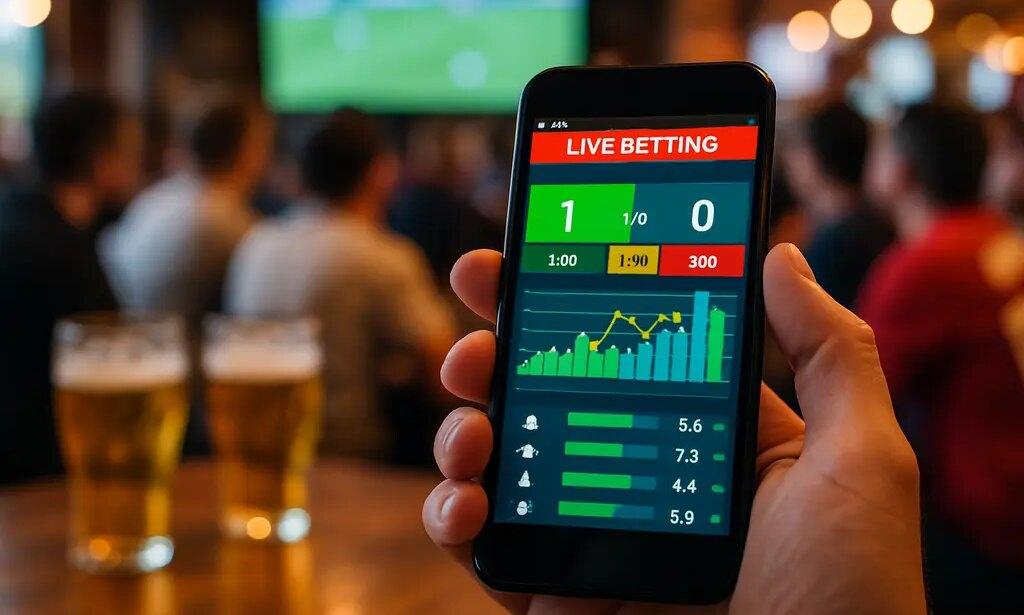
As of September 18, 2026, NFL Live Betting analysis is less about predicting the next drive and more about checking whether a sportsbook has enough prop variety, liquidity, and price consistency to make comparison meaningful. The market is broad, but breadth alone is not quality. A large menu can still have thin limits, delayed updates, wider margins, or uneven player coverage.
The supported data points for mid-September 2026 show a clear divide between headline bet types and deeper player-prop menus. ParlayBuilder.io reports that, in a roughly 400-day window ending September 15, 2026, at least 14 NFL prop markets were regularly measured across 8,090 player-games for 112 players with at least 10 games each ParlayBuilder NFL insights. Sportstensor described NFL player props as the fastest-growing NFL betting segment and said prop lines are often softer than spreads or totals because of lower liquidity and fewer pricing resources Sportstensor player-prop strategy.
How NFL Live Betting Depth Is Measured
NFL Live Betting Market Signals
Market depth should be separated into three layers: availability, price formation, and execution quality. Availability asks whether the sportsbook posts a prop at all. Price formation asks whether the number appears close to the broader market, without assuming that every difference is useful. Execution quality asks whether the market remains available after a play, during stoppages, or near key moments such as fourth downs, red-zone snaps, and possession changes.
For NFL Live Betting, the most visible markets usually include moneyline, spread, and total. Player props sit on a different track. They need player participation assumptions, injury awareness, role projection, game script sensitivity, and rapid data updates. That creates more places for books to differ, especially after early drives reveal usage patterns that were not clear before kickoff.
What Player-Game Counts Can And Cannot Show
The ParlayBuilder sample is useful because it shows repeated tracking across players and prop categories rather than a one-game snapshot. Still, it should not be treated as a universal map of every sportsbook menu. A dataset of measured props can show which categories are common enough to track, but it does not prove that all operators offered the same lines, limits, or in-play availability at the same time.
Receiving-yards and receptions data also show why baseline context matters. In the research notes, league-wide median values from the same 400-day window included a median player receiving-yard output of 60.9 yards and a median balanced line around Over 52.5. Receptions showed a median player output near 5.0 and a median balanced line around Over 4.5. Those figures are historical distribution markers, not instructions for any specific game.
Prop Variety Before Kickoff
Passing, Receiving, And Rushing Menus
Prop variety tends to look strongest before kickoff because sportsbooks have more time to post and maintain markets. Common NFL player-prop groups include passing yards, passing touchdowns, completions, attempts, interceptions, rushing yards, receiving yards, receptions, and anytime touchdown. The practical question is whether those categories remain available after kickoff and whether updates reflect game state quickly enough to compare prices.
A quarterback passing-yard market can have different depth characteristics from a wide receiver receptions market. Passing props often tie to high-volume roles and larger data samples. Receiving and rushing props can react more sharply to personnel changes, defensive matchups, drive volume, and injury-related rotation. That does not make one category better than another. It means each category needs a different review standard.
Operator Depth Versus Pricing Confidence
A sportsbook with more props is not automatically offering a clearer market. A deep menu may include small-limit props, suspended markets, or prices that move too quickly for fair comparison. A smaller menu may still be cleaner if its core markets are stable and updates are consistent. The data-led question is not “which book has the most props,” but “which book maintains comparable props with transparent pricing behavior across similar game states.”
This is where market-depth logging helps. A reviewer can record which props are posted before kickoff, which remain open after the first quarter, which disappear during high-volatility sequences, and which return after official stat updates. That creates an evidence trail instead of relying on memory or isolated screenshots.
| Market Feature | What To Record | Why It Matters |
|---|---|---|
| Prop Availability | Markets posted before kickoff and after each quarter | Shows whether variety survives live conditions |
| Price Movement | Line changes after drives, injuries, and turnovers | Helps assess pricing sensitivity |
| Suspensions | Markets paused before snaps or during reviews | Signals execution limits and data latency |
| Comparable Lines | Same player and prop across operators | Supports cautious market comparison |
Comparing Live Markets Without Picks
Line Movement And Liquidity Checks
NFL Live Betting analysis should avoid turning every line difference into a betting claim. A price gap can reflect stale data, injury uncertainty, low limits, different grading rules, or a book’s risk position. It can also close before a user can act. That is why comparison work should log time, game clock, score, possession, player status, and market suspension patterns.
The cautious approach is to study repeatable behavior. Does one operator post receiving props deeper into the second half? Does another remove rushing markets after injuries? Are same-player props suspended more often near the red zone? Those questions do not require a pick. They test whether the live menu is reliable enough to evaluate.
- Record the exact game clock when comparing live props.
- Separate line movement from price movement when possible.
- Check whether a market is open, suspended, or removed.
- Do not compare markets with different grading rules as if they are identical.
- Keep jurisdiction and account access limits separate from market-quality notes.
For readers tracking the data-feed side of this topic, BettorSearch has also covered live betting markets and real-time data, which connects latency, official feeds, and operator product depth.
Access, Data Latency, And Responsible Review

Regulated Access And Product Limits
Jurisdiction matters. A user in one regulated state may see different markets, rules, limits, and bet types than a user in another location. This article does not address offshore access or methods to bypass location rules. Any market review should be based on legal, regulated access where the reader is located.
Live props also depend on data timing. Official stat changes, replay reviews, injury updates, and drive sequencing can all affect whether a sportsbook keeps a prop open. A suspended market is not always a flaw; it can be a control against trading on delayed information. But frequent or uneven suspensions make comparison harder, especially in player-specific markets with low liquidity.
The analytics site Sharp-9 within the same network emphasizes the importance of market evaluation over bet promotion. This distinction is crucial in an area where rapidly changing screens can create a misleading impression of weak signals.
Responsible review also means avoiding claims that a prop category is easy to price or easy to exploit. The supported research says player props may have lower liquidity and fewer pricing resources than spreads or totals. It does not prove that any specific live prop is mispriced at a given moment.
NFL Live Betting Market Depth Checks
A careful NFL Live Betting review before NFL games should start with documented market structure, not outcome opinion. The strongest evidence comes from repeated observations across games: which prop categories appear, how long they stay open, how quickly they update, and how prices compare when the same player and stat are available at multiple regulated operators.
The practical read from the September 2026 research is measured. NFL prop variety is broad enough to support category-level study, with at least 14 measured prop markets in the ParlayBuilder data. Sportstensor’s analysis gives a reason to watch props closely: lower liquidity and fewer pricing resources can create more pricing variation than core markets. But those same traits also raise the risk of stale screens, low limits, quick suspensions, and misleading comparisons.
For analysts, the better process is to archive the market, timestamp the observation, and separate availability from price. That method does not produce picks. It produces a cleaner record of where market depth is real, where it is thin, and where a live menu may look larger than it functions during NFL game flow.