
World Cup bet builder strategy is having its tournament moment because the 2026 group stage is built for temptation. Spain, Belgium, Uruguay, Saudi Arabia, Iran, Cape Verde, New Zealand, and Egypt all create the kind of pressure spots that push bettors away from simple moneylines and toward bigger same-game combinations.
That does not make every bet builder smart. For those comparing legal-market access and betting options in the U.S., top georgia sportsbook apps can be a useful state-by-state reference, but the harder question during the World Cup is not where to bet. It is whether the bet slip is pricing the relationship between each leg fairly.
Bet Builders Fit the World Cup Mood Almost Too Well
World Cup betting has always been emotional, but the 2026 format adds more fuel. With expanded participation, more group-stage matches, and more third-place qualification scenarios, bettors are watching games where a draw, goal difference, team rotation, and late tactical changes can shift the meaning of every market.
The official FIFA match schedule lists the June 21 slate with Spain vs Saudi Arabia, Belgium vs Iran, Uruguay vs Cape Verde, and New Zealand vs Egypt. That lineup is exactly the type of schedule where bet builders become attractive. There are favorites under pressure, underdogs trying to protect a point, and matches where one early goal can change the whole betting map.
A standard moneyline asks one blunt question: who wins? A bet builder lets the bettor create a story. Spain to win, Spain clean sheet, a forward to score, Saudi Arabia carded. Belgium to win, over team goals, Iran carded, a key creator to record a shot on target. Uruguay to control the result, Cape Verde to stay compact, fewer total goals.
The appeal is obvious. Bet builders turn match opinion into a narrative. The danger is that narratives often feel more coherent than the actual probability behind them.
World Cup Bet Builder Strategy Starts With Correlation
Correlation is the part many recreational bettors underestimate. In a same-game bet builder, one leg can make another leg more or less likely. That relationship changes the true price.
If Spain wins comfortably, a Spain clean sheet may become more plausible. If Belgium dominates possession, Belgium shots on target may rise. If an underdog is chasing late, card markets and corner markets may move differently. These links are not random. Sportsbooks know that, and the odds are adjusted.
That is the key difference between a normal parlay and a same-game bet builder. In a traditional multi-game parlay, each leg usually comes from a separate event. Spain to win and Uruguay to win are separate match outcomes. In a same-game bet builder, Spain to win and Spain over 2.5 goals are connected because the same match script influences both legs.
Good World Cup bet builder strategy begins by asking whether the sportsbook is already charging for that connection. A bettor may think, “If Spain win, their striker has a good chance to score.” That logic may be true. But if the adjusted price already reflects it, the bet may not offer value.
The worst bet builders usually have a familiar shape: favorite to win, favorite over team goals, favorite striker to score, favorite clean sheet, opponent under corners. It looks tight. It feels logical. It may also be heavily priced.
The Strongest Slips Are Usually Smaller Than Bettors Want
A four-leg bet builder can look disciplined compared with a 10-leg accumulator, but the same problem still applies. Every added leg must do real work. If a leg is included only because it makes the payout look more exciting, it is probably weakening the slip.
For World Cup matches, that matters because group-stage incentives are not always clean. A favorite may need a win, but not necessarily a wild attacking performance. A team may lead 1-0 and reduce tempo. A manager may protect players on yellow cards. An underdog may accept a narrow defeat if goal difference remains useful. A late goal can break one leg while the main match read was mostly correct.
That is why the best builders often start with one match assumption and then stop before the slip becomes fragile. If the assumption is “Belgium control territory,” possible legs might include Belgium draw no bet, Belgium team shots, or Iran cards. But adding Belgium clean sheet, Belgium first-half win, exact scorer, and over match goals may turn one idea into five separate vulnerabilities.
| Bet Builder Element | What It Adds | Main Correlation Risk |
|---|---|---|
| Favorite to win | Anchors the match view | Often linked to goals, clean sheet, and player props |
| Team goals over | Adds attacking upside | Can be overpriced when paired with a favorite win |
| Anytime scorer | Adds player-specific reward | Depends on minutes, role, penalties, and game state |
| Cards market | Captures pressure or defensive strain | Referee style and early score can change behavior |
| Clean sheet | Supports dominance angle | One transition, penalty, or set piece can break the slip |
| Corners or shots | Adds volume-based logic | May not match the final-score prediction |
The table shows the central issue. Most legs are not bad on their own. The problem appears when too many legs depend on the same match story unfolding perfectly.
Favorites Under Pressure Can Create False Confidence
Spain and Belgium-type fixtures draw attention because bettors often expect elite teams to respond after a flat opening result. That can be a useful handicap angle, but it can also lead to inflated confidence.
A pressured favorite does not automatically become a better bet. Sometimes pressure creates urgency. Sometimes it creates impatience. Sometimes the opponent knows exactly what the favorite must do and shapes the game around delay, fouls, compact defending, and counterattacks.
That is where bet builders can become especially risky. A bettor may assume the favorite starts fast, dominates possession, scores early, avoids defensive danger, and produces a clean player-prop path. Those assumptions may all point in the same direction, but they are still separate events.
Pressure is not the same as probability. A team can need three points and still struggle to create high-quality chances. A star forward can be central to the plan and still be substituted before the bet resolves. A favorite can control 70 minutes and concede from one set piece.
The World Cup also brings national-team uncertainty that club bettors sometimes overlook. Teams have less tactical rhythm than clubs. Player roles can shift between tournaments and qualifiers. Penalty takers may be unclear. A player’s club form may not translate to national-team usage. That makes player props and same-game combinations more delicate.
The Accumulator Problem Is Bigger Than the Payout
Accumulators are popular because they make small stakes feel meaningful. World Cup match days make that temptation stronger because games are stacked across time zones, fan attention is high, and social media rewards screenshots of ambitious slips.
The issue is not that every accumulator is reckless. The issue is that a long accumulator often hides weak reasoning behind one attractive payout number. A bettor may have two strong opinions and four soft guesses. The sportsbook does not care which legs are confident and which are decorative. All must win.
That is why bet-builder discipline should include deletion. If one leg cannot be defended without using phrases like “could happen,” “why not,” or “adds value,” it probably should not be there. A good same-game slip is not just a bigger version of a match preview. It is a priced position on a specific game script.
A bettor looking at Uruguay vs Cape Verde, for example, may believe Uruguay have enough quality to win. That does not automatically justify adding over 2.5 goals, a specific scorer, Uruguay most corners, and Cape Verde under shots. Cape Verde’s defensive structure, match tempo, and Uruguay’s finishing efficiency all matter.
For New Zealand vs Egypt, the same principle applies. A perceived edge on Egypt does not automatically validate a BTTS leg or an anytime scorer leg. Lower-margin matches can punish builders because one goal changes urgency, but not always in the direction the bettor expects.
Bankroll Control Is Part of the Strategy, Not a Side Note
Bet builders can create a misleading sense of precision. Because each leg looks researched, the final ticket can feel more analytical than a standard parlay. That feeling can encourage larger stakes than the true probability justifies.
A better approach is to treat same-game builders as high-variance products. Stake sizes should reflect that. Even a thoughtful three-leg builder can lose because one player is substituted early, one referee lets contact go, or one team changes shape after halftime.
The National Council on Problem Gambling’s responsible gambling guidance emphasizes setting time and financial limits, betting only what can be afforded as a loss, and avoiding loss-chasing. Those principles are especially relevant during tournament football because the schedule encourages repeated betting decisions in a short period.
World Cup bettors should separate entertainment slips from serious positions. If a bet builder is mainly for fun, stake it like entertainment. If it is meant to be a value bet, it needs a stronger process: price comparison, leg-by-leg justification, injury and lineup review, and awareness of how the sportsbook has adjusted correlated outcomes.
Bankroll discipline protects the bettor from being right too casually. It is possible to read a match well and still build the wrong ticket around that read.
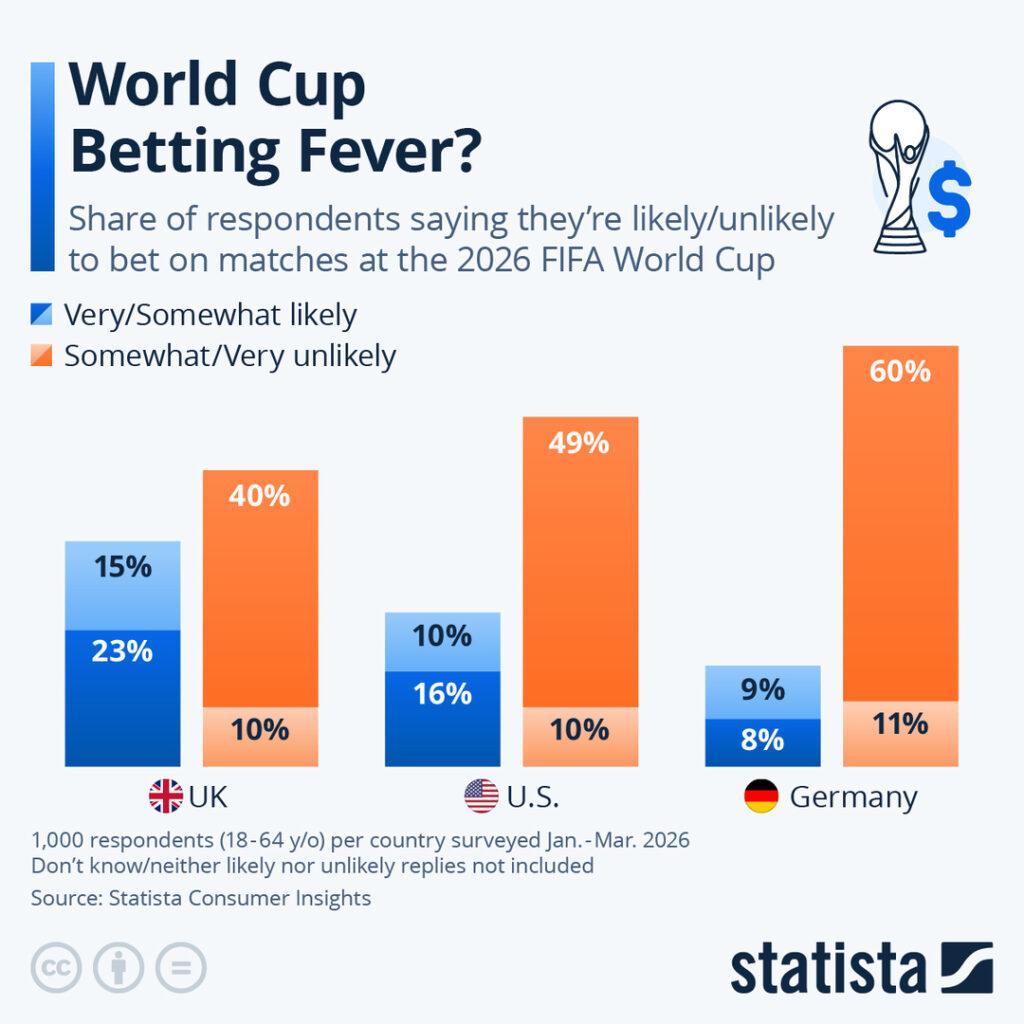
The Signals That Should Decide a World Cup Bet Builder
The best pre-match builders are not built from team reputation alone. They are built from signals that can be checked before the market closes.
Lineups matter first. A striker prop is weaker if the player is not guaranteed 70-plus minutes. A shots-on-target leg changes if a wide player is moved deeper. A card angle changes if a defensive midfielder is rested or if the underdog switches to a back five.
Market movement matters too. If a favorite shortens heavily but the team-goals line does not move in the same direction, that gap may say something. If the clean-sheet price collapses after lineup news, the value may already be gone. If cards markets shift after referee assignment becomes clear, old assumptions may be stale.
Match incentives may be the most overlooked signal. In a group stage, a team’s preferred outcome is not always maximum attack. Some teams need only avoid defeat. Some may manage energy. Some may protect goal difference. Some may be forced to open up only if a parallel match changes the table.
That is why live betting can sometimes be cleaner than a pre-match builder. Watching the first 10 to 15 minutes may reveal whether the favorite is actually pressing, whether the underdog is willing to counter, whether the referee is card-happy, and whether the match tempo supports the original theory. The price may be less attractive after kickoff, but the information may be better.
Strategy Still Beats Hype
The rise of bet builders during the World Cup is not surprising. They are entertaining, flexible, and well matched to matches where bettors want more than a win-or-lose position. They let fans translate tactical views into one compact ticket.
But that convenience is also the trap. Same-game combinations can make a bettor feel sharper while quietly increasing exposure to correlation, pricing adjustments, and fragile match scripts. The smartest bettors are not the ones building the longest slips. They are the ones cutting out unnecessary legs before the payout number takes control.
World Cup bet builder strategy should begin with one question: what has to be true for this entire ticket to win? If the answer requires a perfect favorite response, a specific scorer, a clean sheet, friendly referee behavior, and cooperative game tempo, the bet is probably more delicate than it looks.
The World Cup will keep producing attractive bet-builder spots because the stakes are high and the matchups are rich. The edge belongs to bettors who treat correlation risk as the main event, not the fine print.
FAQ’s
What is a World Cup bet builder?
A World Cup bet builder combines multiple selections from the same match into one wager. It may include result, goals, cards, corners, shots, player props, or clean-sheet legs on a single ticket.
Why is correlation risk important in bet builders?
Correlation risk matters because one leg can affect the likelihood of another. Sportsbooks usually adjust prices for related outcomes, so a logical-looking combination may not offer the value bettors assume.
Are World Cup bet builders better than regular bets?
Not automatically. Bet builders can be useful when the match script is clear and the price is fair, but single bets are often cleaner when uncertainty around lineups, tempo, or team incentives is high.